React Server Components in 2026: what they actually change
RSC is now the production-standard React architecture - it ships less JavaScript and fetches data on the server. The real shift, and the pitfalls.
5 min read
React Server Components (RSC) are no longer experimental - in 2026 they're the production-standard way to build React apps, and they quietly rewrite three things: where your data is fetched, how much JavaScript ships to the browser, and how you think about the client/server boundary. Most teams still build React the way they did in 2022 - everything runs in the browser, data is fetched with useEffect, and the bundle grows with every feature. The server-first model flips that default, and for content-driven and data-heavy apps it's mostly a win. But it comes with a genuinely new mental model and a few sharp pitfalls worth naming.
Why this matters now
RSC crossed the line from "interesting" to "default." It's now the default architecture in the Next.js App Router, and the payoff is concrete: server-rendered components deliver 30-50% smaller JavaScript bundles along with built-in SEO, direct database access, and streaming rendering out of the box (Telerik - What's next for React in 2026). Alongside it, the React Compiler shipped v1 in October 2025, which auto-memoizes your components - making manual useMemo, useCallback, and React.memo the exception rather than the rule.
The backdrop: server-first is now the default rendering strategy for new projects, not an optimization you bolt on later. That's a real shift in what "a normal React app" means.
The mechanism: two kinds of component
The whole idea rests on one distinction. In the RSC model, components are either Server Components (the new default) or Client Components (opt in with "use client").
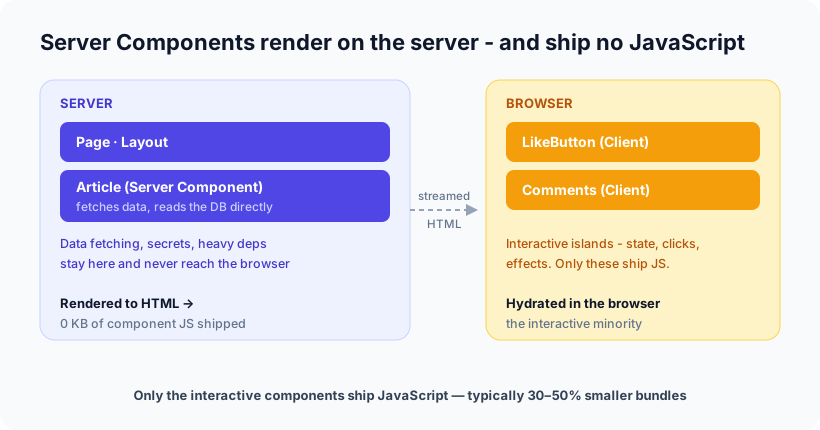
- Server Components run only on the server. They can fetch data, read the database directly, and use secrets - and they ship zero component JavaScript to the browser. The user gets HTML.
- Client Components are the interactive islands - anything with state, effects, or event handlers. These hydrate in the browser and are the only things that ship JS.
The performance win falls out of this automatically: in a typical app, most of the tree is static or data-driven (layout, article body, product details) and only a minority is interactive (a like button, a comment box). Render the majority on the server, ship JS only for the interactive minority, and the bundle shrinks.
What actually changes in how you build
- Data fetching moves to the server, inside the component. Instead of
useEffect+ a loading spinner + an API round-trip from the browser, a Server Component just awaits its data where it's rendered. Fewer client-server round-trips, no waterfall. - The
"use client"boundary becomes a design decision. You think in terms of "does this need to be interactive?" - and push that boundary as far down the tree as possible so the interactive part stays small. - Secrets and heavy dependencies stay on the server. A markdown parser or a database client never reaches the browser, so it never costs the user a byte.
The mental shift is simple to state and takes real practice: default to the server, and reach for the client only where the UI has to react to the user.
The pitfalls (this isn't free)
We'd be doing you a disservice to pretend it's all upside. The real traps:
- The boundary is easy to get wrong. Mark a component
"use client"too high in the tree and everything beneath it becomes client-side too - you lose the bundle savings without realizing it. - You can't use hooks or browser APIs in Server Components. No
useState, nouseEffect, nowindow. Code that assumes them needs restructuring. - Mental overhead is real. "Which environment does this run in?" is a new question on every component, and teams new to RSC ship bugs at the boundary until it clicks.
- Not every app benefits equally. A highly interactive dashboard is mostly client components anyway; the biggest wins are content- and data-heavy apps.
Our opinion
Our take: for new content-driven and data-heavy React projects in 2026, server-first is the right default, and fighting it usually means shipping more JavaScript than your users need. The bundle-size and data-fetching wins are real and they show up directly in Core Web Vitals - which is why this connects to what makes a website fast.
But - and this matters - RSC is a means, not a badge. We've seen teams contort a simple, highly-interactive app into the server model for its own sake and end up with more complexity and no benefit. The honest rule is the one from our Next.js vs React piece: pick the architecture that fits the app. For most sites and data-heavy products, that's now RSC. For a deeply interactive tool, plain client React is still perfectly correct. Don't let the trend make the decision for you.
How Ashvara helps
We build on the modern React and Next.js stack every day, including RSC where it earns its place - and we're candid when a project is better served by a simpler client-side approach. Getting the server/client boundary right is exactly the kind of thing that separates a fast, maintainable app from one that's technically "modern" but ships a heavy bundle anyway.
If you're starting a new build, modernizing an older React app, or just not sure whether server components fit your product, that's our web development work. Tell us about the app and we'll recommend the architecture honestly - including when the answer is "you don't need this."
Sources: Telerik - What's next for React in 2026; React Server Components patterns and pitfalls (jsmanifest); React Server Components in production (Growin).